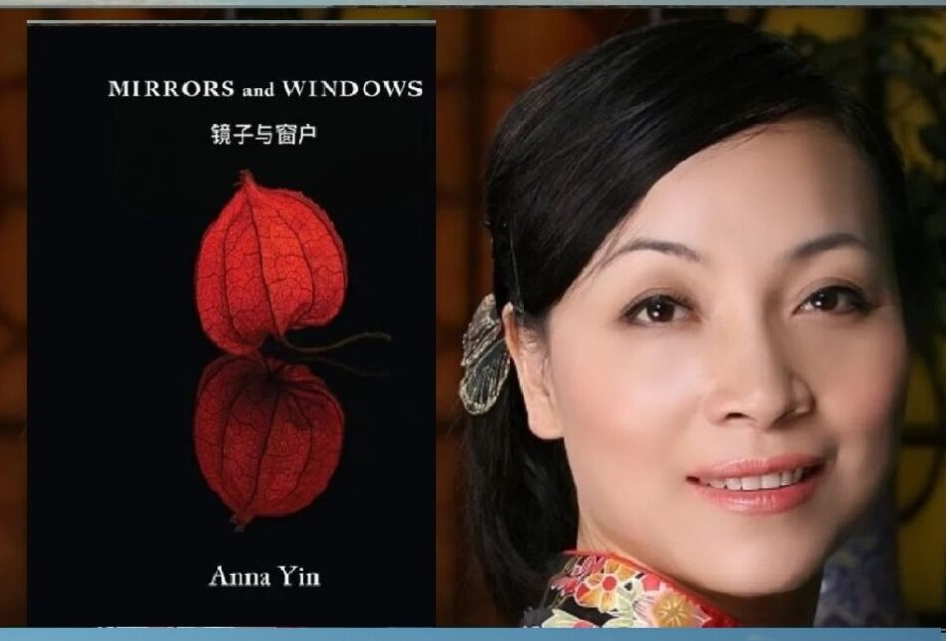
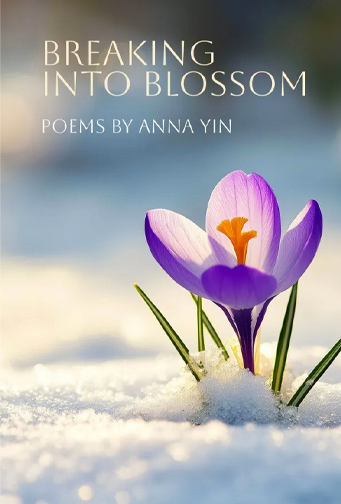
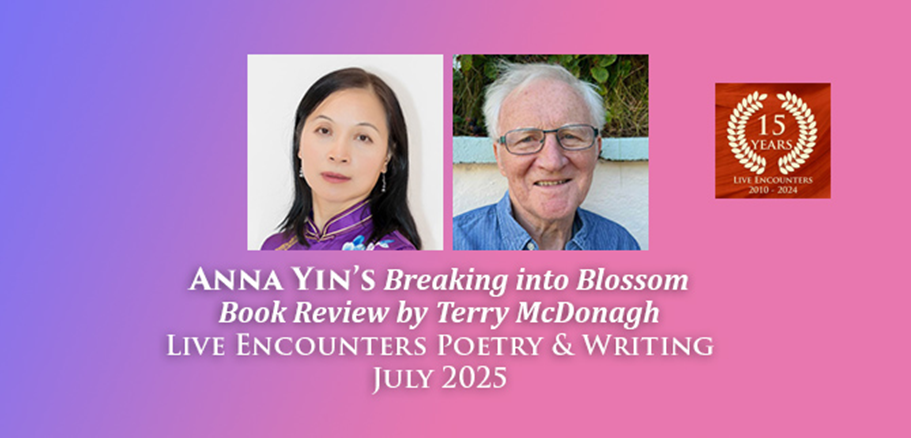
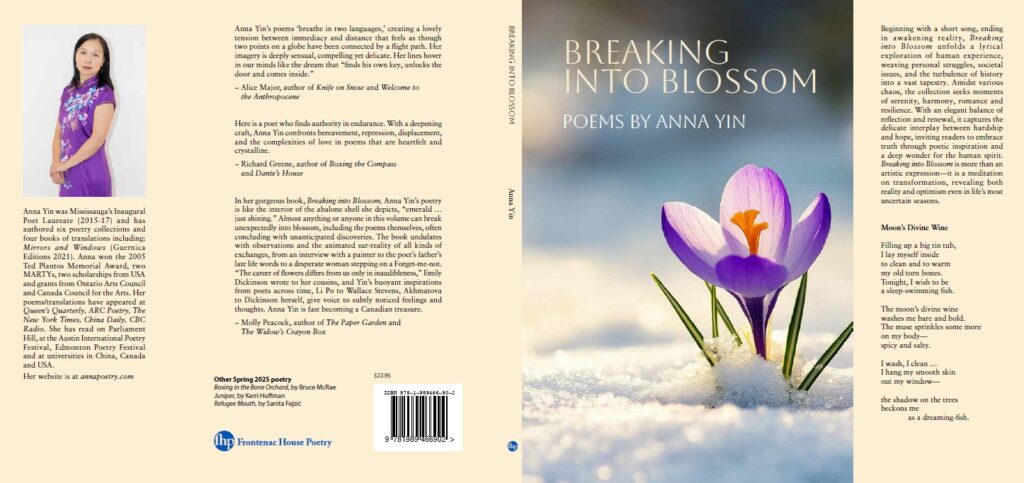
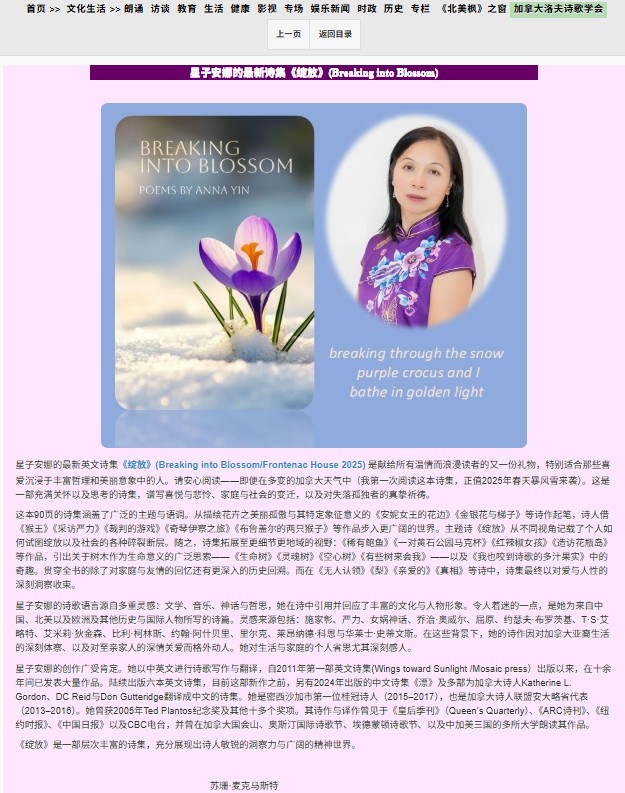
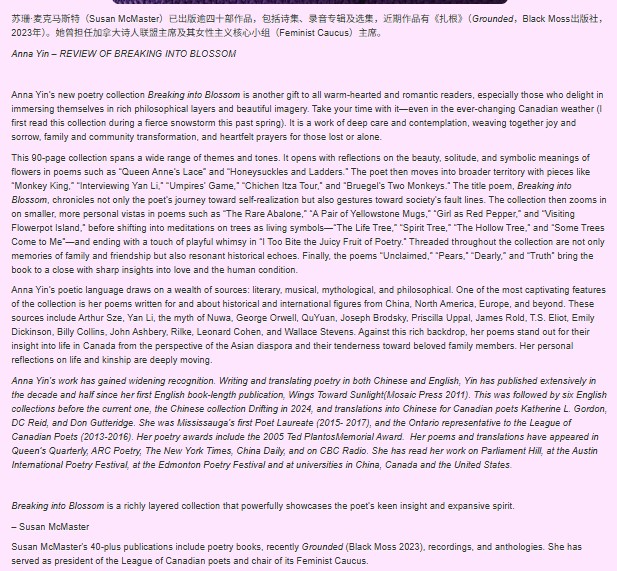
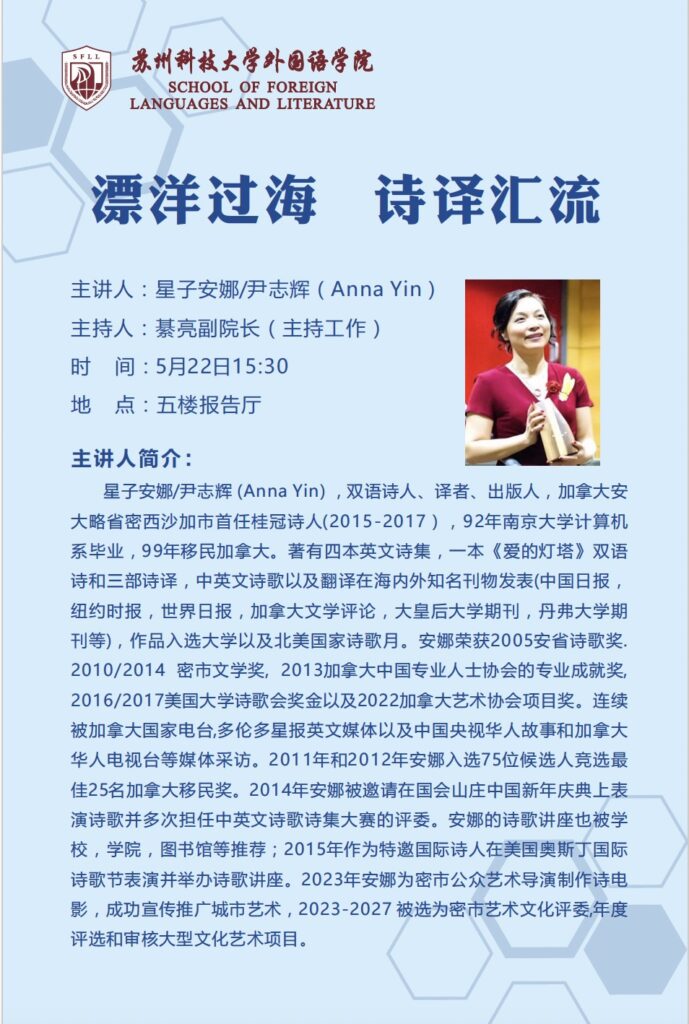
星子安娜在她第七本诗集《绽放》(Breaking into Blossom,Frontenac House出版社,2025年)中,以早期的一行诗句勾勒出移民生活的缩影、东西方文明的间距,以及翻译过程里难以弥合的得失——这般凝练而深刻的表达,令人联想到巴勃罗·聂鲁达的笔触。在“安妮皇后的蕾丝“一诗中,诗人对标题植物低语:“在崎岖路旁你蓬勃生长”。安娜笔下这被世人忽视的野花,正如同聂鲁达在“番茄颂”或“衣裳颂”中对日常之物的点化。后者以这样的哲思作结:“因我们本是一体/将继续并肩直面/深夜的风暴、街巷或挣扎/终将融为/或许,或许某日的静止终结。”与聂鲁达一样,安娜的诗歌倾注于微末之物,凝视伤痛与消逝,始终横跨在生命粗粝的表层与那令人心碎的凄美之间。
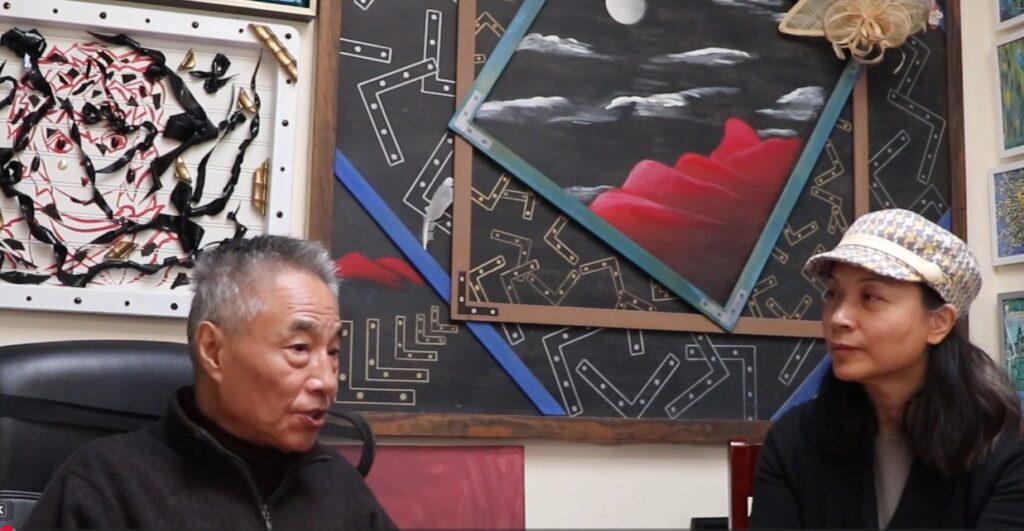
在《采访严力》(Interviewing Yan Li)中,我们看到一位敏感诗人的心灵,居住在一个充满色彩、节奏与动荡世界的绘画作品的屋中,而这位艺术家仿若“孙悟空”般存在——在冥想中保持安宁与超然。在这里,我们感受到诗人作为观察者——沉静而敏锐,易感灵动下笔有神,使读者得以体验到她默默凝视美、善、失落、流放与喜悦的身影。
特里·麦克多纳(Terry McDonagh)是诗人兼剧作家,曾在欧洲、亚洲和澳大利亚从事写作与教学工作。他曾任教于汉堡大学教授创意写作,并担任汉堡国际学校的戏剧导演。迄今已出版十五部诗集,以及书信、剧作、散文和青少年诗歌作品。2022年3月,他作为圣帕特里克节庆典的一部分,担任布鲁塞尔的驻站诗人与游行总指挥。其作品已被翻译成德语、印尼语和阿拉伯语。诗作〈UCG by Degrees〉被镌刻于爱尔兰戈尔韦大学校园里。2020年,由维尔纳·莱翁(Werner Lewon)制作与主持的两集广播纪录片《归家的两则札记》(Two Notes for Home)聚焦于“奇尔艾丹的现代吟游诗人”——特里·麦克多纳的生平与创作。他近年的诗集包括:电子诗集《罗森克兰兹与吉尔登斯吞没有死》;以及面向青少年的《我写诗,因为……》。在汉堡生活三十余年后,他于2019年回到梅奥郡定居Bottom of Form